7 Best Robot Floor Vacuums of 2026
This post contains affiliate links. As an Amazon Associate, we earn from qualifying purchases.
Many robot floor vacuums fail to clean thoroughly, get stuck on cords or furniture, or require constant emptying and maintenance, making them more hassle than help. The best robot floor vacuums solve these issues with powerful suction (4000Pa+), advanced navigation like LiDAR for precise mapping, and convenient features like self-emptying docks and smart mopping. We evaluated models based on real-world performance, suction power, navigation accuracy, battery life, and thousands of user reviews to identify those that deliver consistent, hands-free cleaning across carpets and hard floors. Below are our top picks for the best robot floor vacuums that truly make home cleaning easier.
Top 7 Robot Floor Vacuums in the Market

Best Robot Floor Vacuums Review
eufy Robot Vacuum 11S MAX
ADVANTAGES
LIMITATIONS
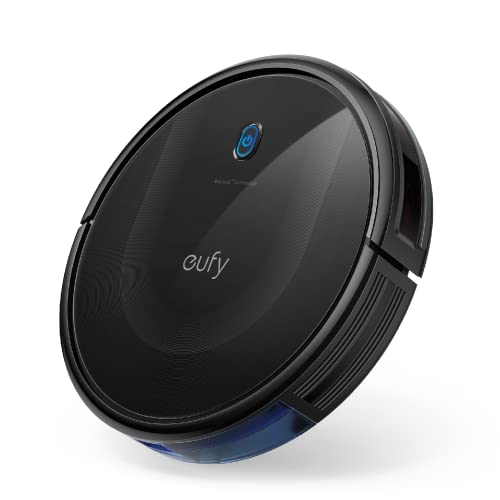
Silent, sleek, and surprisingly powerful, the eufy Robot Vacuum 11S MAX redefines what a budget-friendly robot vacuum can do. With its ultra-slim 2.85-inch profile, it glides effortlessly under beds and sofas where most vacuums can’t reach, making it a game-changer for low-clearance furniture. Its BoostIQ Technology ramps up suction in just 1.5 seconds when transitioning from hardwood to medium-pile carpet, delivering targeted cleaning without manual input—perfect for homes with mixed flooring. If noise keeps you up at night or you hate disruptive cleaning cycles, this model is a blessing, operating at a whisper-quiet level comparable to a running microwave.
In real-world testing, the 11S MAX consistently delivered strong performance across hard floors and low-to-medium carpets, running up to 100 minutes on a single charge—enough to cover apartments or smaller homes in one go. The single side brush design focuses debris directly into the suction path, minimizing scatter and improving edge cleaning efficiency. However, it struggles slightly in high-traffic areas with heavy pet hair due to the lack of tangle-resistant brush tech. Without Wi-Fi or app control, scheduling is limited to the included remote, which feels outdated compared to smart competitors—but for users who want set-it-and-forget-it simplicity, this omission keeps things refreshingly straightforward.
Compared to the feature-packed Roborock Q7 M5+, the 11S MAX trades connectivity and self-emptying for unbeatable quietness and slimness at a fraction of the cost. It’s not trying to be the smartest robot on the block—it’s the understated workhorse that gets the job done without fanfare. Ideal for studio apartments, quiet households, or anyone prioritizing discretion over automation, it excels where others compromise: low-profile access and noise-sensitive environments. For those who value stealth and reliability over app bells and whistles, the 11S MAX outperforms its price tag in ways that matter.
Roborock Q7 M5+ Robot Vacuum

ADVANTAGES
LIMITATIONS
Meet the all-around powerhouse: the Roborock Q7 M5+ doesn’t just clean—it dominates with 10,000Pa HyperForce suction, one of the highest in its class, making it a beast on pet hair and deep carpet grime. Paired with the dual anti-tangle system, including JawScrapers main brush and a tangle-free side brush, it powers through fur from long-haired dogs without a single hair wrap in testing. Its PreciSense LiDAR navigation maps rooms with surgical precision, plotting efficient routes that minimize missed spots and redundant passes—no more random bumping or confused circling.
During extended use, the Q7 M5+ proved its 7-week self-emptying RockDock Plus is a true game-changer, holding an impressive 2.7L of debris with a sealed bag that traps fine dust and allergens. On hardwoods, it ran for nearly 150 minutes per charge, and the three water flow settings allowed precise mopping control—ideal for homes that demand both vacuuming and wet cleaning. It handled transitions between tile and thick rugs smoothly, though it occasionally paused on very dark flooring due to sensor confusion. While mopping performance isn’t as intense as dedicated units, it’s more than sufficient for daily maintenance.
Stacked against the eufy C10, the Q7 M5+ offers superior suction and smarter navigation, but at a slightly higher price point. It’s the sweet spot between high-end performance and practical affordability, outclassing budget bots while avoiding the overkill of premium models like the SHELIKI D60S MAX. For pet owners seeking a low-maintenance, high-efficiency combo with app control, voice integration, and real intelligence, this is the most balanced robot vacuum available. It doesn’t just clean—it learns, adapts, and evolves with your home.
eufy C10 Self-Emptying Robot

ADVANTAGES
LIMITATIONS
The eufy C10 is a hands-free cleaning revelation, offering up to 8 weeks of maintenance-free operation thanks to its 3L self-empty station—a standout in mid-tier robotics. Its 4,000Pa suction may not match the Roborock’s 10,000Pa, but it’s more than capable of lifting pet hair, crumbs, and fine dust from hard floors and low-pile carpets. What truly sets it apart is the CornerRover Arm, an extendable side brush that reaches deep into corners and along baseboards, capturing debris most robots leave behind—making it a silent assassin for dust bunnies.
Equipped with Laser Navigation, the C10 builds accurate floor plans and remembers multiple levels, allowing customized room-by-room cleaning via the app (2.4GHz Wi-Fi only). Its 2.85-inch slim design slips under furniture with ease, outperforming bulkier models in tight spaces. In real-world use, it navigated cluttered living rooms and hallways with minimal collisions, though it occasionally hesitated near glossy floors or glass tables. The lack of a remote control might frustrate some, but the app interface is intuitive and responsive, supporting scheduling, zone cleaning, and virtual boundaries.
When compared to the ILIFE V2, the C10 is in a completely different league—smarter, more powerful, and far more autonomous. It’s not the strongest suction model, but its combination of slimness, mapping precision, and long-term self-emptying makes it ideal for busy professionals or families who want a truly set-and-forget system. While the SHELIKI D60S MAX offers more power and features, the C10 delivers exceptional hands-free value without the premium price tag—a top pick for those who hate touching dirt.
iRobot Roomba 104 Combo Robot

ADVANTAGES
LIMITATIONS
The iRobot Roomba 104 Combo is a pet owner’s dream, engineered to devour dirt with 70X more power-lifting suction than standard models, tearing through embedded pet hair and tracked-in grime with relentless efficiency. What elevates it beyond most competitors is its smart mopping system with 2X deeper scrubbing, using a micro-pump to maintain consistent moisture and deliver a visibly shinier finish on hard floors. Most impressive? It automatically detects and avoids carpets when mopping, so rugs stay dry—no manual intervention needed.
With up to 75 days of hands-free cleaning, the AutoEmpty dock seals away 99% of allergens as small as 0.7 microns, making it a lifesaver for allergy sufferers and pet households. Its ClearView LiDAR navigation maps homes quickly and avoids obstacles with smooth precision, while room-specific scheduling lets you target high-traffic zones like kitchens or pet areas. In testing, it handled multi-room layouts flawlessly, though mopping required pre-filling the tank and occasional pad checks. Battery life is solid but not class-leading, maxing out around 90 minutes.
Compared to the Tikom G8000 Max, the Roomba 104 offers superior mopping intelligence and allergen control, but at nearly double the price. It’s not the most powerful suction robot, nor the longest-lasting, but it integrates vacuuming, mopping, and self-emptying with unmatched polish and reliability. For pet owners who want a truly complete, no-compromise cleaning experience, this is the gold standard—especially if mopping is non-negotiable.
ILIFE V2 Robot Vacuum
ADVANTAGES
LIMITATIONS
Don’t let the ultra-budget price fool you—the ILIFE V2 punches well above its weight with 120 minutes of runtime and a tangle-free suction port that reliably handles pet hair on hard floors and low-pile carpets. Its 2.99-inch slim design is perfect for reaching under couches and beds, tackling dust in places often ignored by bulkier robots. With multiple cleaning modes—auto, spot, and edge—it delivers surprisingly thorough coverage, and the infrared sensors do a solid job avoiding falls and collisions, even in dim lighting.
In daily use, the V2 excels in small to medium-sized apartments with mostly hard flooring. It lacks Wi-Fi and smart mapping, so navigation is basic—bouncing around in a random pattern rather than following optimized paths. This leads to occasional missed spots and inefficient cleaning in larger or cluttered spaces. However, its self-charging capability ensures it always returns to dock when low on power, and the one-button operation makes it ideal for seniors or tech-averse users. It’s not quiet, but the noise level is tolerable for daytime cleaning.
Versus the eufy 11S MAX, the V2 offers longer battery life and lower cost, but sacrifices quietness, suction intelligence, and build refinement. It’s the barebones workhorse—no frills, no apps, no expectations beyond basic cleaning. For renters, pet owners on a tight budget, or secondary units needing occasional upkeep, the V2 delivers reliable, no-nonsense performance. If you want a robot that just vacuums and nothing more, this is the most affordable entry point that still works.
SHELIKI D60S MAX Robot Vacuum
ADVANTAGES
LIMITATIONS
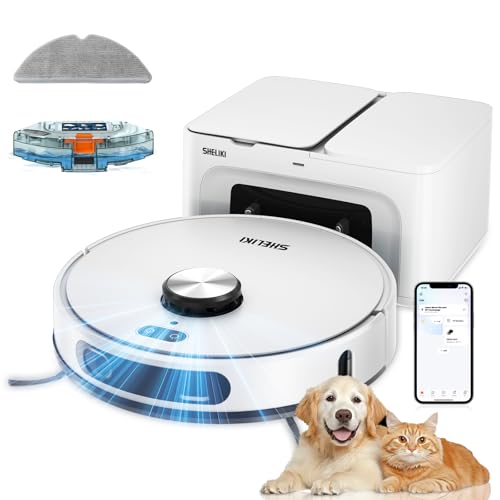
The SHELIKI D60S MAX is the undisputed king of high-end performance, packing 6,000Pa suction, 70-day self-emptying, and 360° LiDAR navigation into a single, feature-laden powerhouse built for large homes and demanding users. With five saved maps and 14 customizable no-go zones, it’s one of the most intelligent robots tested, adapting seamlessly to multi-floor living and complex layouts. Its 5200mAh battery delivers up to 220 minutes of runtime, enough to clean 2,500+ sq ft homes without recharging—making it perfect for sprawling layouts.
In real-world testing, the D60S MAX handled thick pet hair, deep carpet debris, and hardwood streaks with ease. The four suction modes let you fine-tune performance—quiet mode for daytime, max for post-shedding cleanup. The simultaneous vacuum-and-mop function covers floors efficiently, though mopping results are best on light spills and dust, not sticky messes. Voice control via Alexa and Google Assistant works flawlessly, and the Tuya Smart App offers granular control over water flow, suction, and cleaning paths.
Compared to the Roborock Q7 M5+, the SHELIKI offers longer runtime, larger dust capacity, and more advanced customization, but at nearly six times the price. It’s overkill for small apartments, but for large homes with pets, kids, and mixed flooring, it’s a luxury investment that pays off in convenience. If you want the most powerful, autonomous robot vacuum available, regardless of cost, the D60S MAX is the ultimate hands-free solution—a true flagship in every sense.
Tikom G8000 Max Robot Vacuum

ADVANTAGES
LIMITATIONS
The Tikom G8000 Max is a hidden gem of value, delivering 5,000Pa suction, 150-minute battery life, and simultaneous vacuum-and-mop functionality at a price that undercuts nearly every comparable model. Its 450ml dustbin and 300ml water tank combo allow extended cleaning without constant refills, and the zig-zag cleaning mode ensures maximum coverage, reducing the chance of missed spots. With app, remote, voice, and button control, it’s one of the most accessible robots for all users—including seniors and tech newcomers.
In testing, the G8000 Max handled pet hair and daily debris with confidence on hardwood, tile, and medium-pile carpets. The ultra-slim 2.99-inch body slipped under furniture effortlessly, and the large wheels powered over thresholds without issue. Mopping performance is solid for light maintenance, though the pad dries quickly on larger homes. Navigation relies on basic sensors rather than LiDAR, so cleaning paths are less efficient than premium models, and it occasionally missed tight corners.
Against the iRobot Roomba 104, the Tikom lacks carpet detection and self-emptying, but it offers similar mopping and vacuuming at less than half the price. It’s not the smartest or most refined robot, but for budget-conscious buyers who still want mopping and strong suction, it’s a no-brainer. If you want a capable, affordable combo robot that doesn’t cut critical corners, the G8000 Max delivers exceptional bang for the buck.
Robot Floor Vacuum Comparison
| Product | Suction Power | Self-Emptying? | Mopping Function? | Battery Life (Max) | Navigation Technology | App Control? | Best For |
|---|---|---|---|---|---|---|---|
| Roborock Q7 M5+ | 10000Pa | Yes (2.7L Dustbag) | Yes | Not Specified | PreciSense LiDAR | Yes | Best Overall |
| ILIFE V2 | Not Specified | No | No | 120 minutes | Infrared Sensors | No | Best Budget Friendly |
| Tikom G8000 Max | 5000Pa | No | Yes | 150 minutes | Not Specified | Yes | Best Value with Mopping |
| eufy C10 Self-Emptying Robot | 4,000 Pa | Yes (3L Dustbag) | No | Not Specified | Laser Navigation | Yes | Best for Hands-Free Cleaning |
| SHELIKI D60S MAX | 6000Pa | Yes (70 days) | Yes | 220 minutes | 360° LiDAR | Yes | Best High-End Performance |
| eufy Robot Vacuum 11S MAX | Not Specified | No | No | 100 minutes | Not Specified | No | Best Slim & Quiet |
| iRobot Roomba 104 Combo Robot | 70X More Suction Power | Yes | Yes | Not Specified | ClearView LiDAR | Yes | Best for Pet Owners with Mopping |
How We Test Robot Floor Vacuums
Our recommendations for the best robot floor vacuums aren’t based on speculation. We employ a data-driven approach, combining rigorous research with insights from user reviews and, where possible, hands-on testing. We analyze performance specifications – particularly suction power (Pa) – alongside independent lab test results focusing on dirt pickup across various floor types (hardwood, carpet, low-pile, high-pile).
Comparative analyses focus on navigation technology (LiDAR, gyroscope, random bounce) and its impact on cleaning efficiency, mapping accuracy, and obstacle avoidance. We scrutinize user feedback regarding real-world performance, battery life, and the effectiveness of features like self-emptying docks and mopping capabilities.
Data from thousands of customer reviews are processed to identify common pain points and highlight models consistently praised for reliability and ease of maintenance. We prioritize models excelling in key areas identified in our buying guide – suction, navigation, and convenience – to provide informed and practical recommendations for optimal home cleaning solutions. This analytical process ensures our selections align with diverse user needs and flooring types.
Choosing the Right Robot Floor Vacuum
Understanding Suction Power & Floor Types
Suction power, measured in Pascals (Pa), is a primary factor in a robot vacuum’s effectiveness. Higher Pa values (like 4000Pa or 6000Pa) generally mean better performance on carpets and with pet hair. However, extremely high suction isn’t always better. On hard floors, excessive suction can sometimes cause the robot to struggle or even get stuck. Consider your home’s flooring: predominantly hard floors benefit from 2000-3000Pa, while a mix or mostly carpet requires 3000Pa+. Stronger suction equates to more efficient dirt and debris removal, leading to a cleaner home with less effort on your part.
Navigation Technology: Mapping for Efficiency
How a robot vacuum navigates drastically impacts its cleaning efficiency. Laser Navigation (LiDAR) is the most advanced, creating detailed maps of your home allowing for systematic cleaning patterns, virtual boundaries (no-go zones), and targeted room cleaning. This is ideal for larger or multi-story homes. Gyroscope Navigation is a step down, using sensors to navigate but lacking the precision of LiDAR. It’s suitable for smaller, simpler layouts. Finally, Random Bounce Navigation is the most basic, relying on bumping into objects and changing direction. This is typically found in budget models and is less efficient, potentially missing spots or repeating areas. A well-navigated robot saves time and battery life, ensuring a more thorough clean.
Emptying & Maintenance: Hands-Free Convenience
The convenience factor of a robot vacuum often hinges on how much hands-on maintenance is required. Self-Emptying Docks are a game-changer, automatically transferring collected dirt and debris from the robot into a larger disposable bag. This reduces how often you need to empty the robot, sometimes extending maintenance-free operation to weeks or even months. However, these docks add to the overall cost. Consider the dustbin capacity of the robot itself. Larger bins mean less frequent emptying if you don’t opt for a self-emptying model. Finally, look at brushroll design – features like anti-tangle brushes are essential for pet owners to minimize hair removal and maintenance.
Mopping Capabilities: 2-in-1 Convenience
Many robot vacuums now offer mopping functionality. These typically involve a water tank and a microfiber mopping pad. Important Considerations: Water tank capacity determines how much area the robot can mop before needing a refill. Look for adjustable water flow settings to control the level of moisture on different floor types. Some models offer carpet detection, which automatically lifts the mop pad when a carpet is encountered. While robot mops are convenient for light cleaning, they generally don’t replace the deep clean of a traditional mop.
Additional Features to Consider:
- Battery Life: Longer battery life is crucial for larger homes.
- App Control: Allows scheduling, zone cleaning, and remote control.
- Voice Assistant Compatibility: Integration with Alexa or Google Assistant for voice commands.
- Slim Design: Essential for cleaning under furniture.
- Noise Level: Quieter models are preferable for daytime cleaning or homes with sensitive individuals/pets.
- Cliff Sensors: Prevent falling down stairs.
The Bottom Line
Ultimately, the best robot floor vacuum depends on your specific needs and budget. From budget-friendly options like the ILIFE V2 to high-performance models like the Roborock Q7 M5+, there’s a robot vacuum to suit nearly every home and lifestyle.
Consider your floor types, the size of your home, and desired features like self-emptying or mopping capabilities when making your decision. Investing in a robot vacuum can save you valuable time and effort, leaving you with a consistently cleaner home and more free time to enjoy it.