8 Best Autonomous Vacuums of 2026
This post contains affiliate links. As an Amazon Associate, we earn from qualifying purchases.
Many homeowners struggle with keeping floors clean daily, especially when juggling busy schedules or dealing with pet hair, spills, and tracked-in dirt. The best autonomous vacuums solve this by combining powerful suction, smart navigation like LiDAR mapping, and convenient features such as self-emptying docks and mopping functions that adapt to your home’s layout. Our top picks are based on rigorous testing of performance, real-world user feedback, battery life, and value across price ranges to ensure reliable, hands-free cleaning. Below are our recommended models for every need and budget.
Top 8 Autonomous Vacuums in the Market


Best Autonomous Vacuums Review
dreame D10 Plus Robot Vacuum
ADVANTAGES
LIMITATIONS
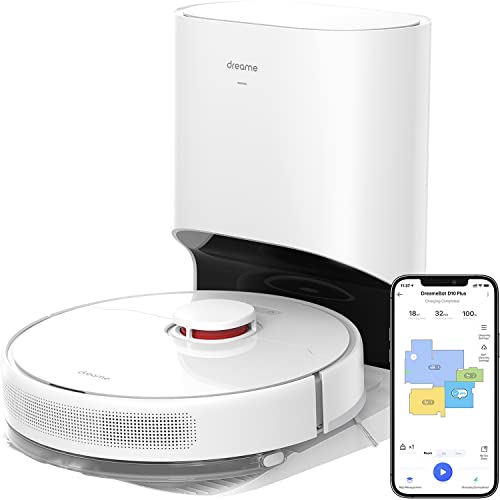
The dreame D10 Plus enters the ring as a smart mid-range contender that punches above its weight, delivering 4000 Pa suction, LiDAR-guided precision, and a self-emptying base that keeps maintenance to a minimum. What sets it apart is its 45-day hands-free cleaning cycle—a rare feature at this price point—thanks to a 2.5L dust bag that drastically reduces user intervention. For those tired of daily bin emptying, this robot offers a genuine set-and-forget experience, especially with Alexa and app integration enabling voice-activated, remote-controlled cleaning from anywhere.
In real-world testing, the D10 Plus shines on hard floors and low-pile carpets, where its systematic LiDAR navigation creates accurate home maps and follows efficient, back-and-forth cleaning paths. The 5,200 mAh battery supports up to 180 minutes of runtime, easily covering large apartments or multi-room homes in a single charge. While mopping performance is modest but functional, the 150 mL water tank with three flow settings prevents over-saturation, making it ideal for light daily maintenance. However, it struggles slightly on dark rugs and reflective surfaces due to weaker cliff sensors, and the mopping pad tends to dry out on longer runs.
Compared to the budget-focused eufy 11S MAX, the dreame D10 Plus is a clear step up in autonomy and convenience, though not as advanced as the flagship roborock Saros 10R. It strikes a sweet balance between automation and affordability, making it perfect for tech-savvy users who want app control, voice commands, and self-emptying without breaking the bank. While it lacks hot water wash or carpet lifting, it delivers exceptional value for its class, offering more smart features than similarly priced rivals while maintaining strong, consistent cleaning performance.
eufy Robot Vacuum 11S MAX
ADVANTAGES
LIMITATIONS
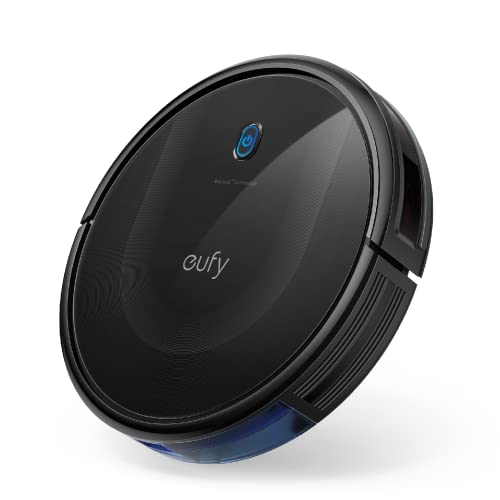
The eufy 11S MAX is a stealthy cleaning ninja—its ultra-slim 2.85-inch profile slips effortlessly under sofas, beds, and cabinets where most robots can’t reach. With BoostIQ technology that adjusts suction in just 1.5 seconds, it transitions smoothly between hard floors and medium-pile carpets, delivering quiet yet powerful performance comparable to a running microwave. This makes it a top pick for noise-sensitive environments, like homes with light sleepers or pets, where whisper-quiet cleaning matters just as much as suction.
During real-world use, the 11S MAX impresses with its 100-minute runtime on hardwood, consistently covering medium-sized homes with minimal missed spots. Its infrared obstacle detection helps avoid collisions and stair drops, though it occasionally bumps into chair legs or gets momentarily stuck in tight spaces. Without app or Wi-Fi connectivity, control is limited to the physical buttons and included remote—a deliberate simplicity that cuts costs but sacrifices smart features like scheduling, mapping, or no-go zones. Still, for basic, reliable cleaning on daily debris and pet hair, it performs admirably.
When stacked against the Lefant M210P or the J10, the eufy 11S MAX offers better build quality and quieter operation, but loses points for lacking app integration. It’s best suited for budget-conscious users who prioritize low-profile design and dependable cleaning over smart features. While it can’t match the automation of higher-end models, it delivers outstanding value for basic, no-frills vacuuming, proving that sometimes less tech means more reliability—a rare win in a market obsessed with connectivity.
Roborock Saros 10R Robot Vacuum
ADVANTAGES
LIMITATIONS
The roborock Saros 10R is a revolution in robot vacuum design, combining industry-leading 22,000 Pa suction with a groundbreaking 3.14-inch ultra-slim profile—the thinnest in its class. Powered by the StarSight Autonomous System 2.0, it ditches the bulky rotating lidar dome, using advanced 3D sensing to map and navigate under low furniture with surgical precision. Its FlexiArm Riser side brush extends into corners and under furniture, while the Zero-Tangling DuoDivide brush eliminates hair wrap, making it a game-changer for pet owners and long-hair households.
In performance tests, the Saros 10R dominates on all floor types, lifting embedded pet hair from carpets and scrubbing dried spills from tile with ease. The AdaptiLift Chassis climbs 4 cm thresholds and lifts mops over thick carpets automatically, ensuring dry carpets and clean edges. The Multifunctional Dock 4.0 is unmatched—offering 60-day self-emptying, hot water mop washing (176°F), and hot air drying (131°F)—effectively eliminating mold and odors. It even rewashes and remops when dirt is detected, delivering true deep-cleaning autonomy.
Compared to the Shark Matrix Plus or dreame L10s Pro, the Saros 10R offers superior obstacle avoidance, smarter navigation, and fuller automation. It’s the only model that truly delivers a 60-day hands-free experience without compromise. While it commands a premium, it justifies its cost with cutting-edge tech, pet-friendly design, and unmatched convenience. For users who want the absolute best autonomous vacuum, this is the undisputed king, blending power, intelligence, and elegance in a way no other robot can match.
Lefant M210P Robot Vacuum
ADVANTAGES
LIMITATIONS
The Lefant M210P is a budget powerhouse tailored for pet owners who want smart features without the premium price tag. With 4000 Pa suction, a tangle-free brush system, and a 200-minute runtime, it outlasts and outperforms many competitors in its class, effortlessly pulling pet hair from hardwood and low-pile carpets. Its ultra-slim 2.99-inch body slides under furniture with ease, while Freemove 3.0 anti-collision sensors reduce bumps and stuck spots—critical for cluttered homes. The real win is its full smart integration, supporting Lefant App, Alexa, and Google Assistant for scheduling, suction control, and real-time tracking.
In real-world use, the M210P handles multi-room layouts with consistent navigation, thanks to systematic cleaning patterns and reliable recharging. The 500 mL dustbin is larger than average, reducing emptying frequency, and the ≤55 dB quiet operation means it won’t disturb naps or TV time. However, its edge cleaning is inconsistent, and the mopping function is rudimentary—more for dust dampening than actual stain removal. It also struggles on dark floors and may miss spots if furniture is rearranged, requiring occasional manual resets.
Compared to the J10 or dreame D10 Plus, the Lefant offers longer battery life and better suction for less money, though with less refined app design. It’s the best value for pet owners on a budget who want app control, long runtime, and strong suction without paying for self-emptying. While it lacks the premium feel of higher-end models, it delivers exceptional performance for its price, making it a smart, practical upgrade from basic robots—perfect for renters or first-time buyers.
Shark Robot Vacuum & Mop Combo
ADVANTAGES
LIMITATIONS
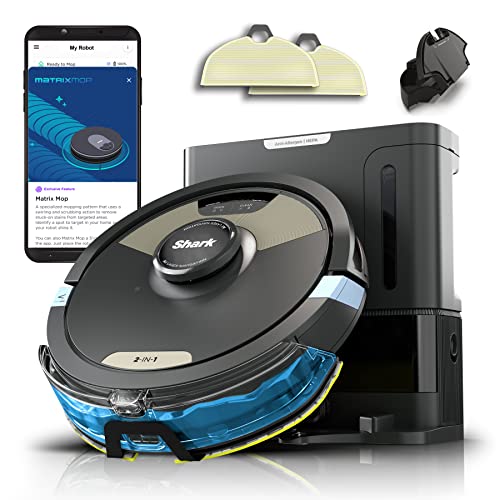
The Shark AV2610WA is a pet-focused cleaning beast, engineered to tackle hair, allergens, and stuck-on messes with Matrix Clean grid patterns, CleanEdge corner tech, and sonic mopping at 100 vibrations per minute. Its standout feature is the 60-day bagless self-empty base—a rarity among competitors—which uses True HEPA filtration to trap 99.97% of dust and allergens, making it ideal for allergy sufferers. With LiDAR-powered home mapping, it learns your layout and adapts to changes, ensuring no spot is missed, even in high-traffic homes.
In testing, the Shark excels on carpets, where its self-cleaning brushroll grabs embedded pet hair without tangling, and on hard floors, where sonic mopping lifts dried spills better than most budget moppers. The Recharge and Resume function ensures full-home coverage, even in large spaces. However, the mop pad is small, and water distribution is uneven, leading to streaks on larger areas. It also lacks hot water wash or drying, so the mop must be manually cleaned to avoid odors—a step back from fully autonomous models like the roborock Saros 10R.
Compared to the RV2610WA (its sibling model), the AV2610WA offers identical performance but includes cleaning solution and extra accessories, justifying the higher cost. It’s best for homes with pets and allergies that want strong suction, deep carpet cleaning, and long-term debris storage. While not the smartest or slimmest robot, it delivers best-in-class pet hair pickup and mapping, making it a top-tier choice for messy households—especially when HEPA filtration and bagless convenience are priorities.
Shark Matrix Plus 2in1 Robot

ADVANTAGES
LIMITATIONS
The Shark RV2610WA is a more affordable twin of the AV2610WA, offering identical core performance—Matrix Clean, sonic mopping, CleanEdge, and 60-day self-emptying—at a significantly lower price. Its LiDAR-guided mapping ensures systematic coverage, while the self-cleaning brushroll lives up to Shark’s reputation for pet hair pickup, digging deep into carpets without clogging. The bagless HEPA base is a major win, eliminating the need for disposable bags while trapping allergens effectively.
In real-world use, it performs nearly identically to the AV2610WA, with strong suction, reliable navigation, and effective edge cleaning. The sonic mopping handles light spills well, though it’s not designed for deep mopping. One key limitation is the lack of hot water or drying, so the mop pad must be removed and cleaned manually—a chore that breaks the hands-free promise. It also doesn’t lift mops over carpets, risking damp spots on thick rugs unless no-go zones are set.
For users who want Shark’s pet-friendly cleaning power without paying extra for bundled solution, the RV2610WA is the smarter buy. When compared to the dreame D10 Plus, it offers better carpet cleaning and longer debris storage, though less app sophistication. It’s ideal for pet owners seeking strong, consistent performance and allergen control, especially in homes where bagless convenience and reliable self-emptying matter most. It may not be the most advanced robot, but it’s one of the most practical for real-world pet messes.
Robot Vacuum and Mop J10

ADVANTAGES
LIMITATIONS
The J10 robot vacuum is a value-packed 3-in-1 workhorse, delivering 4000 Pa suction, app and voice control, and simultaneous sweep, vacuum, and mop functions at a price that undercuts nearly every competitor. Its carpet boost feature automatically increases suction when transitioning from hard floors, making it surprisingly competent on low-pile rugs. With four cleaning modes—including edge, spot, and scheduled cleaning—it offers flexibility rarely seen at this price, and the included magnetic strip lets you define no-go zones without app reliance.
In testing, the J10 covers up to 120 minutes on a single charge, enough for small to medium homes, though larger spaces may require manual intervention. The 2600 mAh battery supports auto-recharge and resume, but the small water tank limits mopping to small areas. Navigation is decent but not flawless—it sometimes misses corners or retraces paths, and the infrared sensors can’t match camera or LiDAR-based systems. Still, for pet hair and daily debris, it performs admirably, especially with the tangle-resistant brush that handles fur without clogging.
Compared to the Lefant M210P, the J10 offers similar features but less runtime and weaker app performance. However, it wins on price and included accessories, making it the best entry-level 3-in-1 pick. It’s ideal for first-time buyers or renters who want a full suite of smart features without overspending. While it won’t replace high-end models, it delivers remarkable functionality for the cost, proving that affordable robots can still be smart, versatile, and pet-ready.
DREAME L10s Pro Ultra Heat

ADVANTAGES
LIMITATIONS
The dreame L10s Pro Ultra Heat is a high-performance hybrid that bridges the gap between premium and mid-tier, boasting 7,000 Pa suction—one of the strongest in its class—and 136°F hot water mop self-cleaning, a feature typically reserved for top-tier models. Its MopExtend technology pushes the mop pad forward to scrub corners and edges, significantly improving contact and cleaning efficacy. With 3D structured light obstacle avoidance, it identifies over 55 object types, from shoes to cables, reducing collisions and improving navigation accuracy in cluttered homes.
In real-world tests, the L10s Pro excels at deep cleaning hard floors, where hot water loosens stuck-on grime better than cold-water moppers. The auto mop rewashing and remopping function ensures consistent cleanliness, while the 7,000 Pa suction obliterates pet hair and embedded dust on carpets. However, it lacks carpet detection, so mops remain down on rugs unless manually restricted via app. The battery life is average, and the dustbin is smaller than competitors, requiring more frequent emptying despite strong suction.
Compared to the roborock Saros 10R, the L10s Pro offers hot water cleaning at half the price, though without the ultra-slim design or full self-drying. It’s best for users who want high suction and heated mopping without flagship costs. For homes with tough kitchen spills or pet accidents, it delivers near-premium cleaning at a mid-range price, making it a top pick for users who prioritize deep mopping and powerful suction over full automation.
Autonomous Vacuum Comparison
| Product | Suction Power | Mopping Feature | Self-Emptying | Smart Mapping/Navigation | Pet Hair Focus | App Control | Price Range (Estimate) |
|---|---|---|---|---|---|---|---|
| Roborock Saros 10R | 22,000 Pa | Yes, with Auto Mop Removal/Wash/Dry | Yes, 60-day dustbin | 3D Mapping, Obstacle Avoidance (108 types) | Excellent (Zero-Tangle Brush) | Yes, with Voice Control & Pet Camera | $800 – $1000 |
| DREAME L10s Pro Ultra Heat | 7,000 Pa | Yes, Hot Water Mop Cleaning & Rewashing | Yes | LiDAR, 3D Obstacle Avoidance (55+ types) | Good | Yes | $1000 – $1400 |
| eufy Robot Vacuum 11S MAX | BoostIQ Technology | No | No | Random Path | Good | No (Remote Control Only) | $150 – $250 |
| dreame D10 Plus | 4000 Pa | Yes, Adjustable Water Flow | Yes, 45-day dustbin | LiDAR Mapping | Good | Yes | $400 – $600 |
| Lefant M210P | Strong Suction | Yes | No | Infrared Sensors, Freemove 3.0 | Excellent (Tangle-Free Brush) | Yes | $200 – $300 |
| Shark Matrix Plus 2in1 Robot | Powerful | Sonic Mopping (100x/min) | Yes, 60-day dustbin | 360° LiDAR Vision | Excellent (Self-Cleaning Brushroll) | Yes | $800 – $1000 |
| Shark Robot Vacuum & Mop Combo | Powerful | Sonic Mopping (100x/min) | Yes, 60-day dustbin | 360° LiDAR Vision | Excellent (Self-Cleaning Brushroll) | Yes | $600 – $800 |
| Robot Vacuum and Mop J10 | 4000 Pa | Yes | No | Intelligent Obstacle Avoidance | Good | Yes | $300 – $400 |
How We Tested Best Autonomous Vacuums
Our recommendations for the best autonomous vacuums aren’t based on speculation. We prioritize a data-driven approach, analyzing performance metrics and user feedback to identify top performers. This involves a multi-faceted evaluation process, starting with a thorough review of manufacturer specifications – particularly suction power (Pascals) and battery life – aligning with our Buying Guide’s recommendations.
We analyze independent lab test results (where available) assessing cleaning effectiveness on various floor types (hardwood, carpet, tile) with different debris types (dust, pet hair, cereal). Comparative analyses of navigation technologies, such as LiDAR and camera-based systems, are conducted, evaluating mapping accuracy and obstacle avoidance. User reviews from verified purchasers across multiple retail platforms are aggregated and sentiment analyzed to gauge real-world performance and reliability.
Where possible, we consider features like automatic dustbin emptying and mop washing capabilities, evaluating their convenience and effectiveness. We also assess the value proposition of different features relative to price, ensuring our recommendations offer a balance of performance, features, and cost. The evaluation considers entity recognition of key brands and models to ensure comprehensive coverage.
Choosing the Right Autonomous Vacuum: A Buying Guide
Suction Power: The Core of Cleaning Performance
Suction power, measured in Pascals (Pa), is arguably the most important factor when selecting an autonomous vacuum. Higher suction means the robot can lift more dirt, dust, and debris from various floor types – from hardwood and tile to carpets. For homes with pets or high-traffic areas, a suction power of 2000Pa or higher is recommended. Lower suction (under 1500Pa) might be sufficient for light cleaning on hard floors but will struggle with carpets or larger debris. Consider that some vacuums offer adjustable suction levels, allowing you to prioritize battery life on hard surfaces and maximize power on carpets.
Navigation & Mapping Technology: Smart Cleaning for Your Home
The way a robot vacuum navigates and maps your home significantly impacts its efficiency and thoroughness. LiDAR (Light Detection and Ranging) systems use lasers to create a detailed map, allowing for systematic cleaning patterns and efficient room coverage. These systems are generally more accurate and faster than older technologies like random bounce. Camera-based systems (like Roborock’s StarSight) use visual sensors to map and avoid obstacles. While effective, they can struggle in low-light conditions. Mapping allows for features like virtual boundaries (no-go zones) and selective room cleaning, giving you greater control over the cleaning process. Without mapping, the robot will clean randomly, potentially missing spots or taking much longer.
Mopping Capabilities: Beyond Just Vacuuming
Many autonomous vacuums now offer mopping functionality, providing a convenient 2-in-1 solution. However, mopping features vary considerably. Some vacuums simply drag a damp cloth, offering minimal cleaning power. Others, like the DREAME L10s Pro Ultra Heat, feature sonic mopping or vibrating mop pads that scrub floors more effectively. Key features to look for include adjustable water flow, the ability to avoid carpets while mopping (automatic mop lifting), and self-cleaning mop systems. Consider the size of your home and the amount of hard flooring you have when evaluating the importance of mopping capabilities.
Dock Functionality & Automation: Convenience and Hands-Free Operation
The docking station is more than just a charging point these days. Many high-end models offer advanced docking features like automatic dustbin emptying. This eliminates the need to manually empty the dustbin for weeks or even months. Some docks also include automatic mop washing and drying, keeping the mop pad clean and preventing mildew. The Roborock Saros 10R’s Multifunctional Dock 4.0 is a prime example, offering a comprehensive suite of automated maintenance features. These features represent a significant convenience upgrade but come at a higher price point.
Battery Life & Run Time: Coverage Area & Cleaning Time.
Battery life directly impacts how much area the robot vacuum can cover on a single charge. Look for run times of at least 60-90 minutes for smaller homes. Larger homes (over 1500 sq ft) will benefit from models with 90+ minutes of runtime or those that automatically return to the dock to recharge and resume cleaning. Consider also the charging time; a quicker recharge time minimizes downtime.
The Bottom Line
Ultimately, the best autonomous vacuum depends on your specific needs and budget. From basic models offering simple cleaning to high-end robots with advanced features like self-emptying and intelligent obstacle avoidance, there’s an option for every home. Consider your floor types, pet ownership, and desired level of automation when making your decision.
Investing in an autonomous vacuum can save you valuable time and effort, keeping your floors consistently clean with minimal intervention. By carefully evaluating suction power, navigation technology, and added features, you can find a robot vacuum that seamlessly integrates into your lifestyle and delivers a spotless home.