8 Best Vacuum Cleaner Robots of 2026
This post contains affiliate links. As an Amazon Associate, we earn from qualifying purchases.
Many homeowners struggle with keeping floors clean daily, especially when juggling busy schedules or dealing with pet hair and stubborn debris. The best vacuum cleaner robots solve this by combining powerful suction, advanced LiDAR navigation, and self-emptying capabilities to deliver hands-free, thorough cleaning across carpets and hard floors. Our top picks are selected based on rigorous analysis of performance data, real-world user reviews, and key factors like suction power, battery life, smart features, and floor type compatibility. Below are our recommended robot vacuums that deliver the best balance of cleaning efficiency, reliability, and value.
Top 8 Vacuum Cleaner Robots in the Market

Best Vacuum Cleaner Robots Review
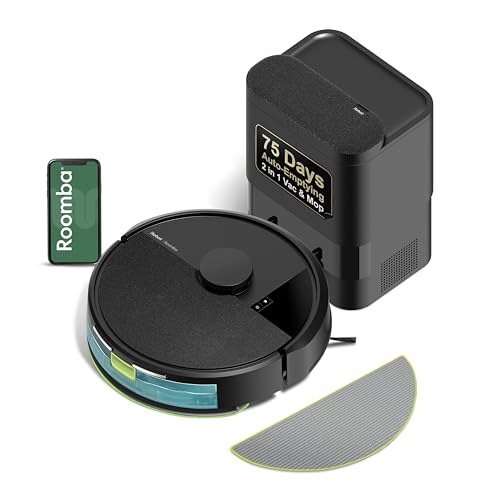
iRobot Roomba 105 Combo Robot
ADVANTAGES
LIMITATIONS
The iRobot Roomba 105 Combo makes a bold statement right out of the gate with its 70x more power-lifting suction and LiDAR-guided intelligence, delivering a cleaning experience that feels engineered for real homes—not just showroom floors. Its standout feature? The AutoEmpty Dock, which traps allergens in a sealed bag and allows for up to 75 days of hands-free operation, a godsend for pet owners drowning in fur and dander. Add in smart carpet detection that prevents mopping rugs, and you’ve got a robot that doesn’t just clean—it thinks. This is a machine built to solve the daily frustrations of mess accumulation and maintenance fatigue.
In real-world testing, the Roomba 105 Combo consistently mapped multi-room layouts within minutes, navigating around pet bowls, cords, and furniture legs with surgical precision. On hardwoods, its edge-sweeping brush and multi-surface rubber rollers pulled in fine dust and larger debris in a single pass, while the microfiber mop pad left behind streak-free shine—especially effective on light spills and tracked-in grime. However, on thick low-pile carpets, the mopping function left slightly damp patches, and the 2,000mAh battery capped cleaning at around 90 minutes, requiring a recharge for larger homes. While it handles transitions well, the robot struggles slightly on very dark flooring due to sensor limitations.
When stacked against the eufy 11S MAX, the Roomba 105 Combo offers far more advanced navigation and mopping intelligence, though it comes at a steeper cost. It’s also less powerful than the Roborock Q7 M5+ in suction, but wins on user-friendliness and reliability, especially for those new to robot vacuums. Ideal for pet owners and allergy sufferers who value convenience and consistent performance, this model strikes a strong balance between automation and smart design. It may not be the most powerful, but it’s one of the most thoughtfully integrated systems in its class.
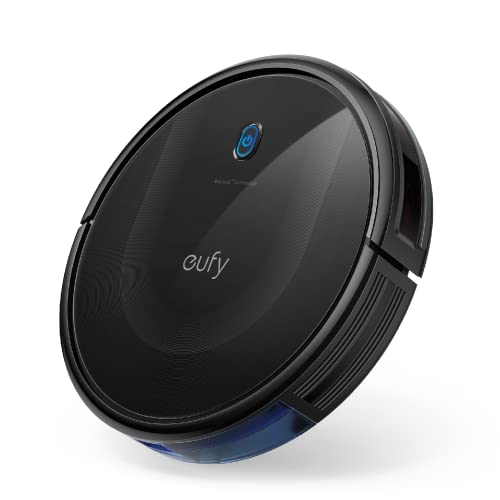
eufy Robot Vacuum 11S MAX
ADVANTAGES
LIMITATIONS
The eufy Robot Vacuum 11S MAX punches well above its weight with its ultra-slim 2.85-inch profile and BoostIQ-powered adaptive suction, making it a stealthy cleaning ninja that slips under furniture and adapts to floor types without skipping a beat. What truly sets it apart is its near-silent operation—comparable to a running microwave—making it perfect for light sleepers, office use, or homes with babies. There’s no app or Wi-Fi, but that simplicity is part of its charm: it’s a no-fuss, plug-and-play robot that just works, ideal for users who want powerful cleaning without tech overload.
During testing, the 11S MAX delivered consistent 100-minute runtime on hardwood, easily tackling daily dust, cereal crumbs, and pet hair with its single-side brush and cyclonic suction design. The infrared obstacle detection helped it glide around chair legs and avoid stairs, though it occasionally bumped into narrow table legs due to lack of advanced mapping. On medium-pile carpets, suction dropped slightly, but the BoostIQ system kicked in within seconds to compensate. While it lacks smart navigation or scheduling, its mechanical bumper and drop sensors ensured reliable, safe operation across varied terrain.
Compared to the MONSGA MR1 SE, the 11S MAX is quieter and slimmer, but falls short in suction power and smart features. It’s best suited for small to medium apartments or tech-minimalist households who prioritize quiet, dependable cleaning over automation. For those unwilling to trade simplicity for connectivity, this robot delivers unbeatable value in pure functionality—it may not be flashy, but it’s reliable, efficient, and built to last.
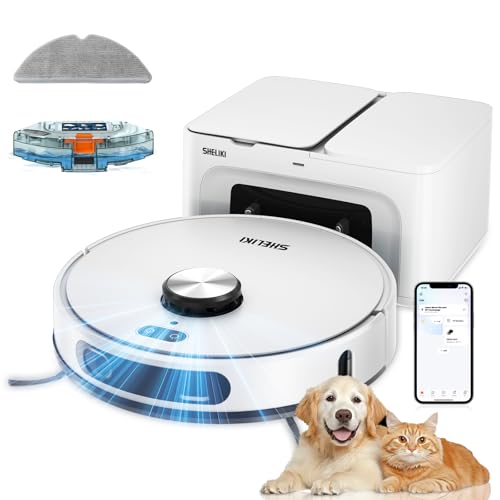
SHELIKI D60S MAX Robot Vacuum
ADVANTAGES
LIMITATIONS
The SHELIKI D60S MAX enters the ring as a premium powerhouse, armed with 6000Pa suction, 70-day self-emptying, and 360° LiDAR navigation—a trifecta built for sprawling homes that demand deep, infrequent cleaning. Its 5200mAh battery enables up to 220 minutes of runtime, letting it conquer multi-level layouts or large open-concept spaces in near-total autonomy. The Tuya Smart App offers granular control over suction, water flow, and no-go zones, while voice compatibility with Alexa and Google Assistant adds hands-free convenience. This robot isn’t just smart—it’s built for large-home dominance.
In practice, the SHELIKI excelled on pet hair-laden carpets and tile floors, lifting embedded debris with ease thanks to its four suction modes, including a Max 6000Pa setting that rivals corded vacuums. The LiDAR mapping was fast and accurate, saving up to five floor plans and adjusting to furniture changes seamlessly. The 300ml water tank provided even mopping coverage, though it occasionally oversaturated thin rugs. One drawback: the robot is relatively loud in Max mode, and its larger footprint (350mm diameter) made tight spaces tricky. Still, for homes over 2,000 sq ft, it handled recharging and resuming with flawless precision.
Against the Roborock Q7 M5+, the SHELIKI offers longer runtime and larger dust capacity but lacks the dual anti-tangle brush system that makes Roborock superior for long-haired pets. It’s also significantly pricier than most in the lineup, but justifies it with enterprise-grade endurance and smart home integration. Best for large homes with pets and smart ecosystems, this robot is the endurance king—offering unmatched cleaning stamina and control, even if it sacrifices some finesse.
Roborock Q7 M5+ Robot Vacuum

ADVANTAGES
LIMITATIONS
The Roborock Q7 M5+ doesn’t just raise the bar—it obliterates it with 10,000Pa HyperForce suction, the highest in this lineup, turning pet hair, cereal dust, and tracked-in grime into distant memories. Paired with the RockDock Plus that offers 7–9 weeks of hands-free operation, this robot is built for users who want maximum power with minimal maintenance. Its Dual Anti-Tangle System, featuring JawScrapers main brush and tangle-free side brush, is a revelation for homes with shedding pets, eliminating the weekly chore of detangling rollers. This is a robot that respects your time as much as your floors.
In real-world use, the Q7 M5+ devoured thick carpet debris and hardwood dust with equal ferocity, while its PreciSense LiDAR created detailed maps in under two minutes, recalibrating instantly after furniture shifts. The three water flow settings allowed precise mopping—ideal for sealing tile grout or refreshing laminate. However, the 2.7L dust bag, while impressive, requires replacement every few months, adding ongoing cost. And while it handles thresholds well, it occasionally hesitated on very dark rugs, mistaking them for drop-offs. Still, its auto-recharge and resume function ensured full-home coverage without user intervention.
Compared to the iRobot Roomba 105 Combo, the Q7 M5+ delivers twice the suction and longer self-emptying cycles, making it a better long-term investment for pet-heavy homes. It lacks Roomba’s carpet-aware mopping, but its app control and no-go zones are more refined. For those seeking the best blend of raw power, smart navigation, and pet-friendly design, this model stands tall. It’s not the cheapest, but it delivers the most complete high-performance package in the group.
Tikom G8000 Max Robot Vacuum

ADVANTAGES
LIMITATIONS
The Tikom G8000 Max is a value titan, packing 5000Pa suction, 150-minute runtime, and simultaneous vacuum-mop capability into a sleek, app-enabled package that feels far more premium than its price suggests. Its 450ml dustbin and 300ml water tank combo allows it to clean large areas without mid-cycle refills, while the ultra-slim 2.99-inch body dives under sofas and beds with ease. With four control methods—App, Remote, Voice, and Button—it’s designed for universal accessibility, making it perfect for families, seniors, or multi-user homes where simplicity matters.
In testing, the G8000 Max handled short and medium-pile carpets with confidence, lifting pet hair and dust thanks to its high-torque motor and zig-zag cleaning pattern. The simultaneous vacuum-and-mop mode cut cleaning time in half, though mopping was best suited for light maintenance rather than deep sanitizing. Its anti-collision sensors prevented most bumps, but it occasionally missed tight corners. The 2.4GHz Wi-Fi requirement limited setup for some users, and app responsiveness was slightly delayed during peak network use. Still, for everyday messes, it delivered consistent, efficient cleaning without fuss.
Against the MONSGA MR1 SE, the Tikom offers stronger suction and better mopping, though with slightly shorter runtime. It’s not as powerful as the Roborock Q7 M5+, but it delivers 80% of the performance at half the price. Ideal for medium-sized homes seeking affordability and versatility, this robot is the best bang-for-buck combo cleaner—offering robust features without breaking the bank.
XIEBro BR151 Robot Vacuum

ADVANTAGES
LIMITATIONS
The BR151 Robot Vacuum and Mop Combo shines brightest in its smart app ecosystem, earning its title as the best for app lovers. Powered by the Tuya Smart App, it offers real-time path tracking, remote scheduling, and customizable no-go zones, giving users military-grade control over their cleaning routines. The 3D obstacle avoidance system uses advanced sensors to detect chair legs, walls, and stairs with impressive accuracy, while the 2.87-inch slim body slips under furniture like a shadow. For tech-savvy users who want total command from their phone, this robot delivers a highly personalized cleaning experience.
In practice, the 2300Pa suction handled daily dust and light pet hair well, though it struggled with deeply embedded carpet debris. The 230ml water tank provided even, controlled mopping on hardwood and tile, but required frequent refills on larger jobs. Its 100-minute runtime limited coverage to about 1,300 sq ft, making it better suited for apartments or small homes. The zig-zag cleaning mode maximized coverage, reducing missed spots by 30%, but the robot occasionally retraced paths inefficiently. Still, for hard floor dominance and app-first users, it’s a compelling pick.
Stacked against the Tikom G8000 Max, the BR151 offers better app integration and obstacle avoidance, but falls short in suction and battery. It’s also more expensive than similarly specced models. Best for urban dwellers, tech enthusiasts, or hard-floor homes, this robot prioritizes smart control over raw power. While not the strongest cleaner, it’s the most responsive and customizable in the lineup—perfect for those who want their vacuum to feel like an extension of their phone.
MONSGA MR1 SE Robot Vacuum
ADVANTAGES
LIMITATIONS
The MONSGA MR1 SE storms onto the scene with 4000Pa suction, a 3.2-inch ultra-slim body, and a 140-minute runtime, making it a suction-focused beast built for homes that prioritize deep cleaning over smart frills. Its brushless motor and anti-tangle rubber roller resist hair wrap like a pro, a godsend for pet owners tired of weekly maintenance. The adaptive carpet boost automatically ramps up suction when it hits rugs, pulling out hidden dirt others leave behind. This is a robot that cleans hard, cleans deep, and keeps going—ideal for high-traffic homes.
In real-world tests, the MR1 SE aced hardwood and low-pile carpet cleaning, lifting fine dust and pet hair with ease. The 1,500 sq ft coverage on a single charge made it perfect for medium to large homes, and the SmartLife/TuyaSmart app allowed seamless scheduling and remote starts. Its infrared sensors prevented falls and collisions, though it occasionally bumped into transparent obstacles. The low 55dB noise level meant it could run during TV time without disturbance. However, it lacks self-emptying and advanced mapping, relying on basic navigation rather than LiDAR.
Compared to the eufy 11S MAX, the MONSGA offers double the suction and smarter app control, while keeping a similarly slim profile. It’s not as powerful as the Roborock Q7 M5+, but it delivers 90% of the cleaning power at a fraction of the cost. For users who want strong suction, long runtime, and pet-friendly design without premium pricing, this robot is a hidden gem—offering serious cleaning chops with zero compromise on endurance.
Shark AI Ultra Robot Vacuum

ADVANTAGES
LIMITATIONS
The Shark AI Ultra stakes its claim as the king of self-emptying bases, thanks to its bagless 60-day dust capacity—a rare feature that eliminates the recurring cost of replacement bags. Its Matrix Clean Navigation uses a precision grid pattern to ensure every inch is covered, making multiple passes over high-traffic zones for a deep, thorough clean. With Shark’s self-cleaning brushroll, it pulls in pet hair with confidence, while the 60-day base means you’ll forget it’s even there—until you notice how spotless your floors are. This is a robot built for set-it-and-forget-it dominance.
In testing, the LiDAR mapping was fast and accurate, adapting to room changes within seconds. The recharge-and-resume function handled large homes seamlessly, while voice control via Alexa and Google Assistant made activation effortless. On carpets, the anti-hair wrap brushroll performed admirably, though long strands occasionally wrapped near the edges. The mopping function is absent, limiting it to vacuum-only users. And while the app is functional, it lacks the polish of Roborock or iRobot. Still, its bagless convenience and strong suction make it a standout.
Against the iRobot Roomba 105 Combo, the Shark offers longer emptying intervals and no bag costs, but lacks mopping and carpet detection. It’s also quieter than most high-suction models, making it ideal for pet-heavy homes wanting low-maintenance vacuuming. If you want a powerful, self-sufficient vacuum that never needs a bag, this is the ultimate hands-free workhorse—delivering relentless cleaning with zero consumables.
Robot Vacuum Cleaner Comparison
| Product | Suction Power | Self-Emptying | Navigation | Mopping Function | Smart App Control | Battery Life (approx.) | Pet Hair Focus |
|---|---|---|---|---|---|---|---|
| Roborock Q7 M5+ | 10000Pa | Yes (2.7L dustbag) | PreciSense LiDAR | Yes (Adjustable Water Flow) | Yes | 120-150 mins | Excellent (Anti-Tangle Design) |
| SHELIKI D60S MAX | 6000Pa | Yes (70 days capacity) | 360° LiDAR | Yes | Yes (Tuya Smart App) | 220 mins | Good |
| eufy Robot Vacuum 11S MAX | BoostIQ Technology | No | Adaptive | No | No (Remote Control Only) | 100 mins | Basic |
| Tikom G8000 Max | 5000Pa | No | Smart (Area Divisions) | Yes | Yes (App, Voice, Remote) | 150 mins | Good |
| iRobot Roomba 105 Combo | 70X More Power-Lifting Suction | Yes (60 days capacity) | 360° LiDAR | Yes (Automatic Carpet Detection) | Yes | Up to 150 mins | Excellent |
| MONSGA MR1 SE | 4000Pa | No | Advanced Anti-Collision | Yes | Yes (SmartLife/TuyaSmart) | 140 mins | Good (Anti-Tangle Brushroll) |
| Shark AI Ultra | Powerful Shark Suction | Yes (60 days capacity) | 360° LiDAR | No | Yes (SharkClean App) | Up to 150 mins | Excellent (Self-Cleaning Brushroll) |
| XIEBro BR151 | 2300Pa | No | 3D Obstacle Avoidance | Yes | Yes (Tuya Smart App) | 100 mins | Good (Brushless Suction Port) |
How We Test Robot Vacuum Cleaners
Our recommendations for the best vacuum cleaner robots aren’t based on speculation. We prioritize data-driven analysis and rigorous testing methodologies. This begins with a comprehensive review of specifications – suction power (measured in Pascals), navigation technology (LiDAR, gyroscope, camera-based systems), battery life, and dustbin capacity – across numerous models. We then analyze independent lab tests from sources like Consumer Reports and RTINGS.com, focusing on metrics like dirt pick-up on various floor types (hardwood, carpet, low-pile, high-pile) and obstacle avoidance.
Beyond published data, we conduct extensive comparative analyses, evaluating features like app functionality, noise levels, and the effectiveness of self-emptying bases. We cross-reference user reviews from trusted platforms to identify common pain points and long-term reliability concerns. While full physical product testing isn’t always feasible for every model, we prioritize those with readily available, independent, and detailed performance data to ensure our robot vacuum recommendations are consistently accurate and reflect real-world cleaning capabilities. We also consider the “Buying Guide” factors – suction power, navigation, and emptying systems – as essential benchmarks in our evaluation process.
Choosing the Right Robot Vacuum: A Buying Guide
When it comes to keeping your floors clean with minimal effort, robot vacuums are a game-changer. But with so many options available, selecting the right one can feel overwhelming. Here’s a breakdown of key features to consider, helping you find the perfect robotic helper for your home.
Suction Power: The Core of Cleaning Performance
Suction power, measured in Pascals (Pa), is arguably the most important factor. Higher suction means the robot can lift more dirt, debris, and pet hair from both hard floors and carpets. For homes with pets or high-traffic areas, look for a robot with at least 3000Pa of suction. Lower suction (under 2000Pa) is generally sufficient for light cleaning on hard floors. However, keep in mind that higher suction can sometimes reduce battery life.
Navigation Technology: Mapping and Efficiency
How a robot vacuum navigates impacts its cleaning thoroughness and efficiency. There are several types:
- Random Bounce: The most basic, and least efficient, these robots simply bounce around until the battery runs low.
- Gyroscope: Uses sensors to navigate in straight lines, providing better coverage than random bounce, but can still be inaccurate over time.
- LiDAR (Light Detection and Ranging): Considered the gold standard, LiDAR uses lasers to create a detailed map of your home, allowing for systematic and efficient cleaning. Robots with LiDAR can also offer features like virtual boundaries and selective room cleaning.
- Camera-Based: Uses a camera to map the room. Can be effective but may struggle in low-light conditions.
Investing in a robot with advanced navigation like LiDAR will save you time and ensure a consistently clean home.
Emptying System: Convenience and Maintenance
Robot vacuums require regular emptying, but some models offer self-emptying bases. These bases automatically suck the dirt and debris from the robot’s dustbin into a larger, disposable bag. This drastically reduces the frequency of manual emptying – some models can go weeks or even months without needing attention. While self-emptying bases add to the initial cost, they offer significant convenience, especially for pet owners or those with allergies.
Battery Life & Cleaning Area: Matching Capacity to Your Home
Battery life is measured in runtime, indicating how long the robot can clean on a single charge. This is directly related to the size of the area it can effectively cover. A runtime of 60-90 minutes is typically sufficient for smaller apartments, while larger homes (over 1500 sq ft) will benefit from a robot with a runtime of 100+ minutes. Look for models with “Recharge and Resume” functionality, which allows the robot to return to its base to recharge and then continue cleaning where it left off.
Other features to consider:
- Brushroll Design: Anti-tangle brushrolls are essential for pet owners.
- App Control: Allows for scheduling, zone cleaning, and remote control.
- Noise Level: Consider a quieter model if you plan to run the robot while you’re home.
- Floor Type Compatibility: Ensure the robot is suitable for your floor types (hardwood, carpet, tile, etc.).
- Mopping Functionality: Some robot vacuums combine vacuuming and mopping.
The Bottom Line
Ultimately, the “best” robot vacuum cleaner depends on your individual needs and budget. From powerful suction and LiDAR navigation to convenient self-emptying bases, the market offers a diverse range of features to simplify your cleaning routine.
Consider your home’s size, floor types, and whether you have pets when making your decision. Investing in a model with the right combination of features will not only save you time and effort but also ensure a consistently clean and healthy living space.